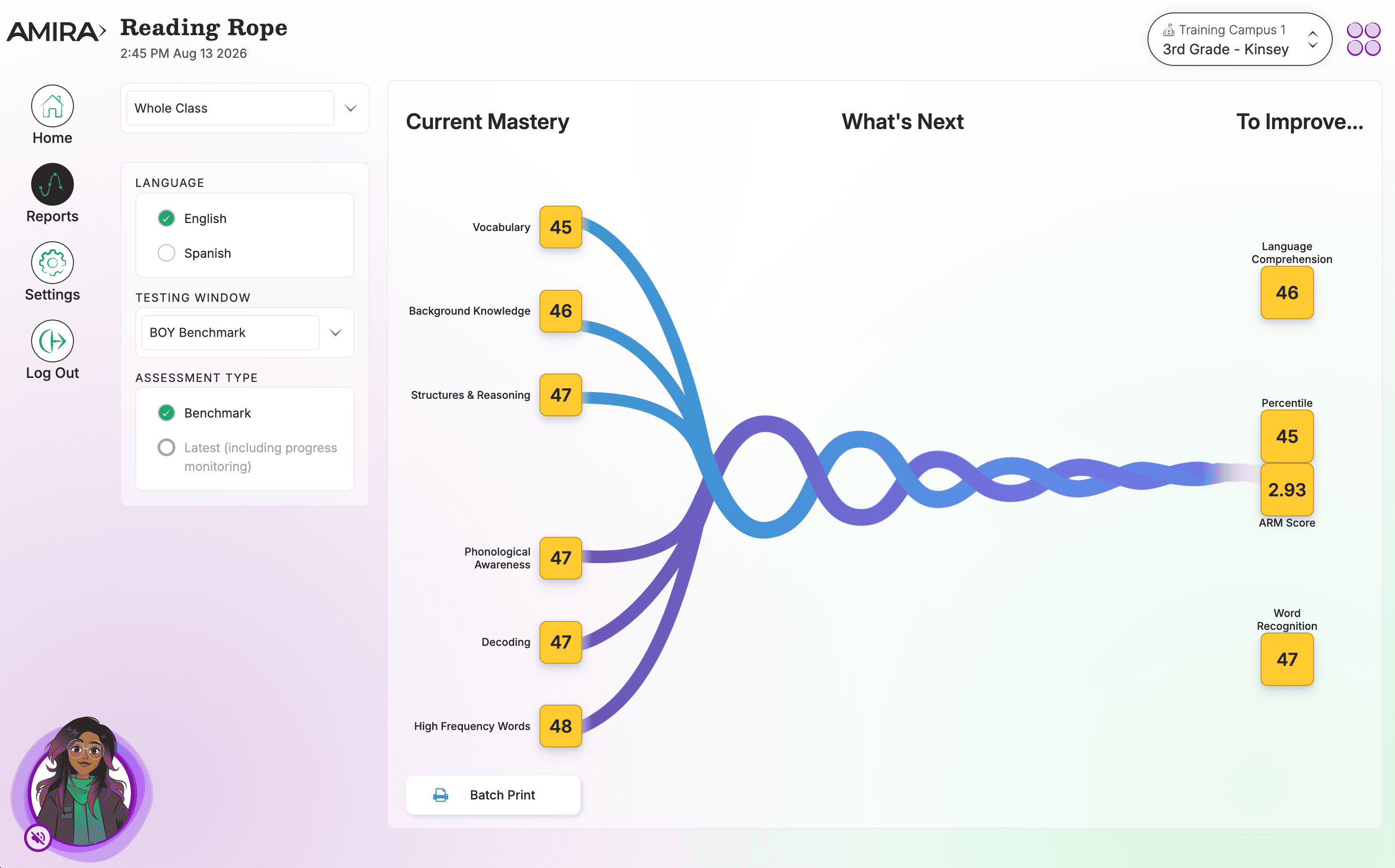
At Amira, every intervention and content decision is aligned to the Science of Reading, recognizing the significant energy our school partners have invested in training teachers to utilize SOR practices and help every student become a masterful reader. The Reading Rope Insights Report brings this framework to life by visualizing the Science of Reading for each student, weaving the six different dimensions of reading ability (Phonological Awareness, High Frequency Words, Vocabulary, Background Knowledge, Structures and Reasoning, and Decoding) into Comprehension and Word Recognition scores for an overall mastery score, based on Scarborough's Reading Rope (Scarborough, 2001).
Summarizing performance from the most recent Benchmark assessment and Progress Monitoring Assessments in terms of these key reading pillars from the Simple View of Reading Framework, the report also provides actionable ideas for helping students drive toward reading mastery, giving teachers an at-a-glance view of a student's reading abilities through the Reading Rope framework.
View a walkthrough of the Reading Rope Insights Report
What You'll See
- Whole Class View: see class average percentile rankings across six core Reading Rope components on the left, and scores synthesized into overall Language Comprehension and Word Recognition scores on the right. View the class average ARM score and Percentile Ranking.
- Individual Student View: see the student's percentile ranking from the selected assessment across each strand of the Reading Rope, as well as their overall Language Comprehension and Word Recognition scores on the right and ARM score and Percentile Ranking. See instructional recommendations and targeted strategies tailored to the student's needs.
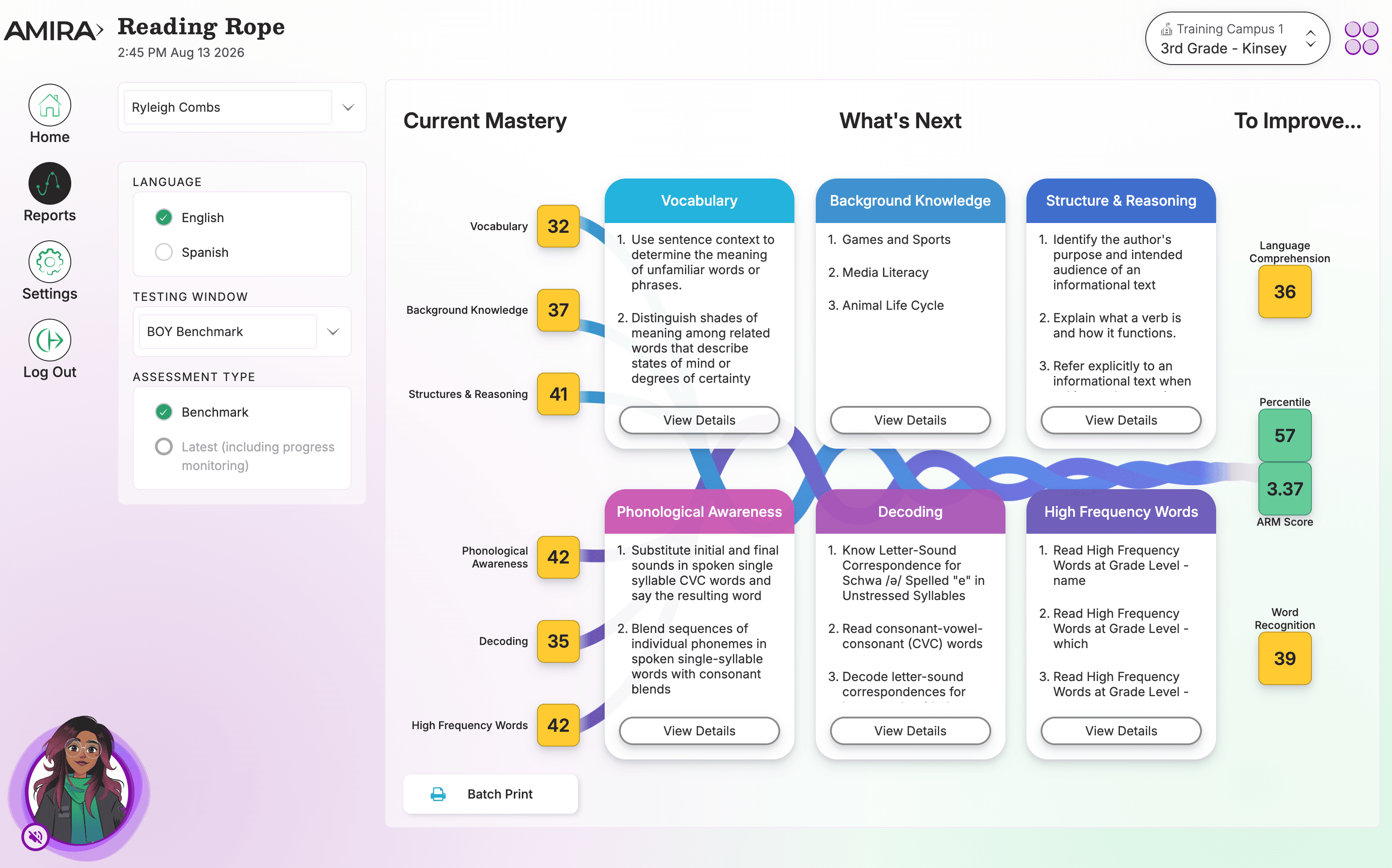
Click on any skill recommendation to access aligned resources for instruction. Click "View Details" to see more detailed skill mastery in the Skills Diagnostic Report.
Actionable Suggestions for Helping Students
Phonological Awareness
Amira analyzes student reading to the phoneme level and suggests phonemes in the Phonological Awareness tab, so you can understand what students may have mastered and what you might use in targeted instruction.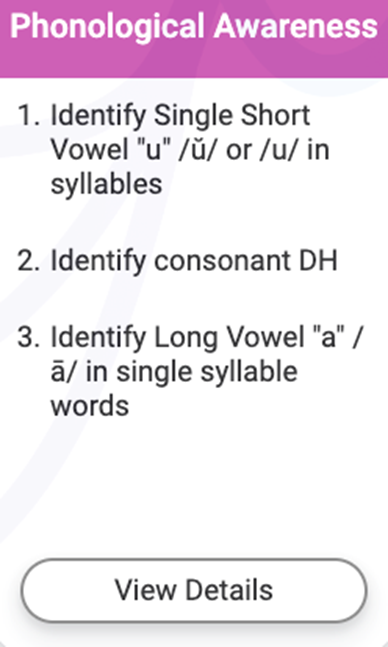
High Frequency Words
Amira analyzes the probability that a student has mastered grade-level high-frequency words based on the student's assessment reading. Amira then suggests high-frequency words that the student has likely mastered and identifies words that can be used in targeted instruction to help the student master important high-frequency words. 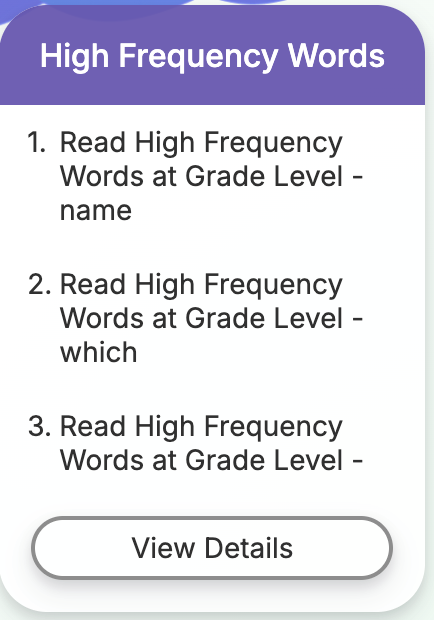
Vocabulary
Amira estimates the number of words in a student's expressive vocabulary based on reading performance and generates lists of words that the student has likely mastered and those that are appropriate for targeted instruction. Use the words on the list to help the student grow vocabulary knowledge.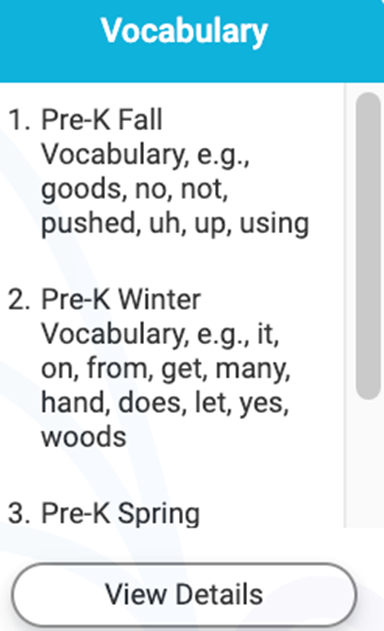
Decoding
Amira analyzes student reading to identify decoding skills that the student has likely mastered and skills appropriate for the student's current development that you can use in targeted instruction to improve the student's decoding ability.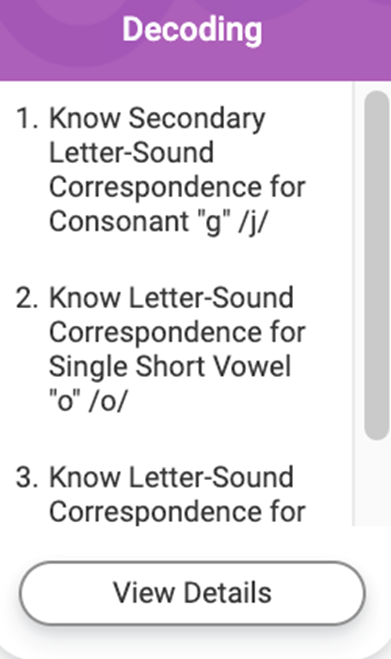
Background Knowledge
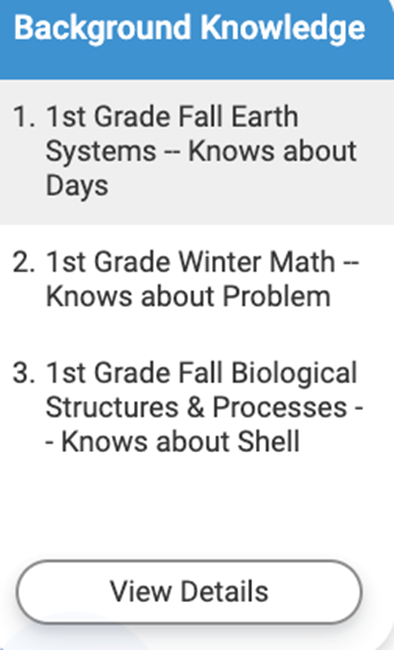
Amira evaluates a student's background knowledge through three main factors:
- Their Vocabulary subscore
- Their fluency on non-high-frequency vocabulary words in their ORF Passage
- Their skills mastery scores for different knowledge categories
For benchmark assessments, especially when a student hasn't had many opportunities to practice with Amira, scores primarily reflect the first two factors, since the assessment is based on a limited set of tasks and a single ORF passage, and research has shown vocabulary and prior knowledge to be strongly linked.
For students who practice regularly with Amira, reports show more detailed information about their prior knowledge by analyzing their fluency with words related to specific subjects, bringing the third factor into play. This works through word categorization: Amira's curriculum specialists have identified sets of grade-appropriate words that fall into certain knowledge categories, for example, a 2nd grade winter curriculum for Earth Science might include texts involving the words mountain, sand, soil, and valley, and the fluency and accuracy with which students read these words in context contribute data to that skills category, with mastery of these domain-specific skills aggregated at assessment time to contribute to the background knowledge percentile ranking.
As a result, regular users, students who practice frequently with Amira and have read texts labelled with these knowledge categories, will have Background Knowledge percentile rankings that reflect a combination of all three factors. New or infrequent users, on the other hand, including students who haven't practiced with Amira or haven't yet encountered texts associated with a knowledge category (as is the case for many BOY screeners and pre-readers), will have their Background Knowledge PR come from just the first two factors, meaning many pre-readers will not receive Background Knowledge scores at all.
Structures and Reasoning
Amira analyzes how students respond to comprehension tasks, including open-ended questions, retells, and text-based reasoning tasks, to evaluate a student's understanding of how texts are organized (such as narrative structure, sequence, and cause-and-effect) and their ability to make inferences and draw connections within a text. From this analysis, Amira identifies structures and reasoning skills the student has likely mastered, along with skills appropriate for their current development that you can use in targeted instruction to strengthen their ability to reason about and navigate text structure.
How to Use This Report
Use this report to identify which strands of the Reading Rope need the most attention for a student, select targeted strategies to address gaps, and click View Details to open the Skills Diagnostic Report for deeper planning and intervention.
Data Source(s): Amira Assess
Update Frequency: Within 24 hours.
Related Resources