| Math/Lectura |
The ISIP Summary Report shows the number and percentage of students at each instructional tier or level for each skill assessed during an assessment period.
This ISIP Summary Report can be run at the district, campus, grade, or classroom level.
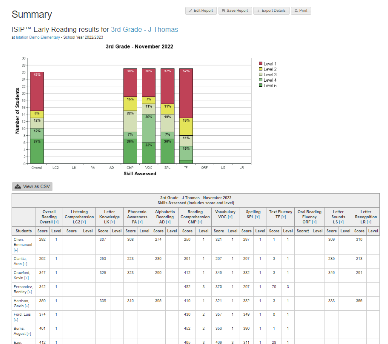
Report Details:
Who is listed on this report?
At the classroom level, students are listed on the report according to their overall score from lowest to highest. Students without a score remain on the report but are listed at the bottom.
At the grade or campus level, classrooms are listed in alphabetical order. Clicking on a classroom will provide student information.
At the district level, campuses are listed in alphabetical order. Clicking on a campus will allow you to drill down to classroom and student information.
How can I navigate this report?
At the district/campus level, administrators will see a snapshot of data for that specific assessment period. From here, they can click on a grade level to see grade-level performance details, or they can click on a specific campus/classroom.
At the classroom level, teachers can see the overall performance of their students as well as the results for each subtest. Clicking on a bar graph will show skill growth overall or for a specific subtest. Scroll down to see individual student results.
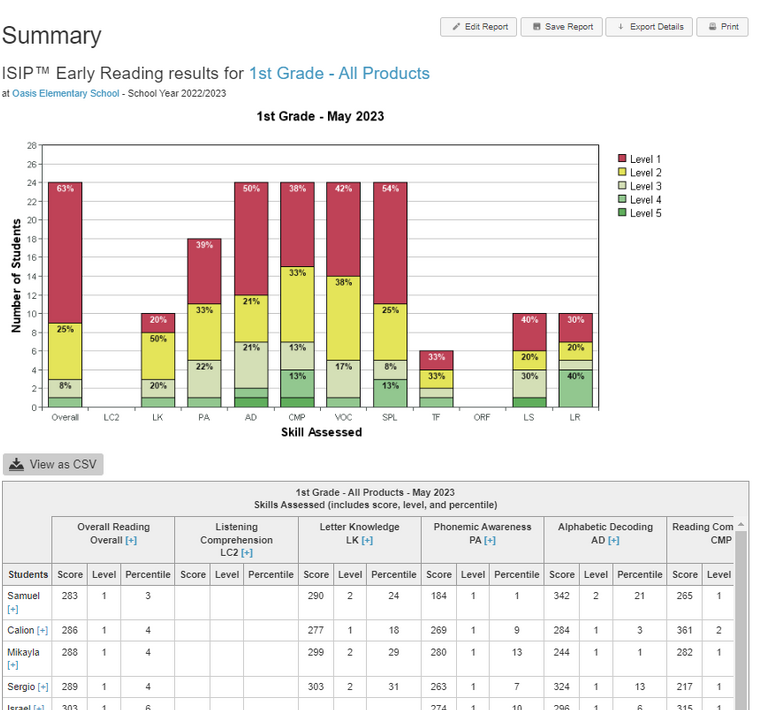
In grades PK-3 there may be students with scores in subtests that are not normed for their grade level. This occurs when a student scores low enough to spiral down into lower subtest areas or scores high enough to gate into higher subtests. These results will not appear on the graph at the top of the report, however, a score is given.
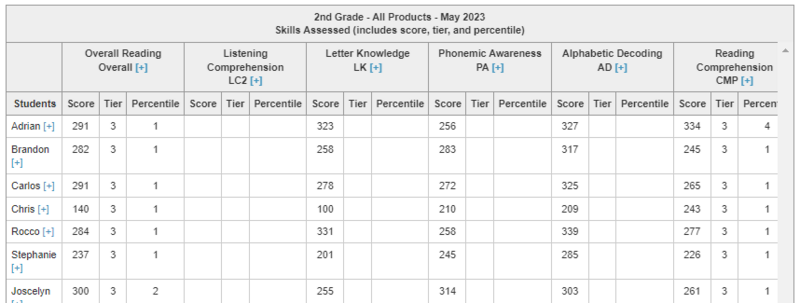
Click on the blue plus sign next to a student's name to open the Student History Report. Click on the plus sign next to a subtest to view Session/Activity Details.
Suggested uses for instructional purposes:
- View the report monthly, after each assessment.
- Identify students in need of additional support.
- Group students for targeted instruction.
- Determine which skills need to be retaught in whole-group or small-group instruction.
Guiding questions:
- What is your class’ biggest strength as a whole? What are the areas for targeted support?
- When drilling down to view whole class growth, what do you encounter?
- What do you think is contributing to your class’ trend?
- What is your plan for addressing these areas of need?