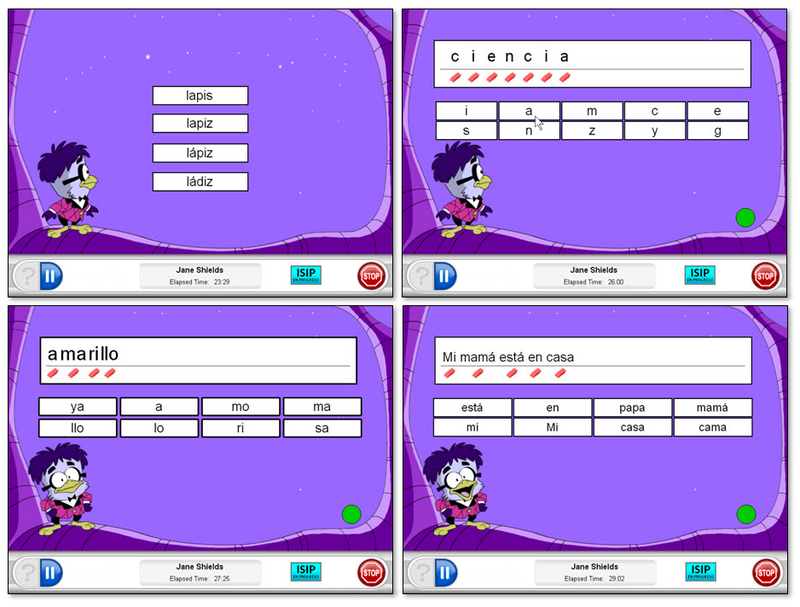
Lectura Temprana assesses all critical areas of Spanish early reading literacy and measures students’ overall reading ability.
Subtests used in the assessment include:
- Destreza fonológica (Phonological Awareness and Phonics)
- Comprensión auditiva (Listening Comprehension)
- Vocabulario (Vocabulary)
- Comprensión de lectura (Reading Comprehension)
- Lectura con fluidez (Text Fluency), not used to calculate overall score
- Comunicación escrita (Written Communication)
Subtests by Grade Level
Prekindergarten
- Comprensión auditiva (Listening Comprehension)
- Destreza fonológica (Phonemic and Phonological Awareness)
- Vocabulario (Vocabulary)
Kindergarten
- Comprensión auditiva (Listening Comprehension)
- Destreza fonológica (Phonemic and Phonological Awareness)
- Vocabulario (Vocabulary)
- Comprensión de la lectura (Reading Comprehension)
Based on the student's initial test, more rigorous subtests may be offered during subsequent assessments
- Comunicación escrita (Written Communication)
First Grade
- Destreza fonológica (Phonemic and Phonological Awareness)
- Vocabulario (Vocabulary)
- Comprensión de la lectura (Reading Comprehension)
- Comunicación escrita (Written Communication)
Second and Third Grade
- Vocabulario (Vocabulary)
- Comprensión de la lectura (Reading Comprehension)
- Comunicación escrita (Written Communication)
- Lectura con Fluidez (Text Fluency)
Subtest Descriptions
Destreza fonológica (Phonological Awareness and Phonics)
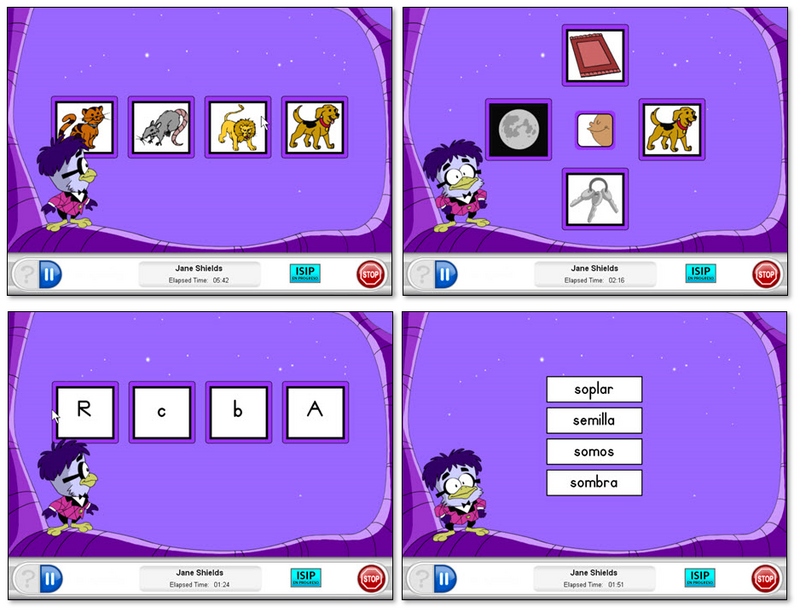
There are five types of questions used to measure students’ phonemic awareness
- Students identify ending sounds by using rhyming objectives.
- Students identify beginning sounds and words by blending phonemes and syllables.
- The narrator says the name of each picture as the box around it highlights. Students are asked to click on the picture that has the same beginning or ending sound as the sound produced orally by the narrator.
- Four pictures appear on the screen with a box in the middle that contains an animated side view of a person’s head. The narrator says one of the words by pronouncing each phoneme or syllable while the animated head demonstrates the specific sounds. Students are asked to click on the picture showing the word that has been spoken.
- Students are asked to identify symbols that correspond to specific sounds of the Spanish language: letras (letters), sílabas (syllables), diptongos/hiatos (diphthong/hiatus), grupos consonánticos (consonant clusters), and palabras (words). Students are presented with items representing various capital and lowercase letter combinations. Four boxes appear on the screen, and only one choice contains the correct answer for each item. The narrator asks students to click on a particular grapheme (letter, syllable, etc.) that represents the sound orally produced by the narrator.
Comprensión auditiva (Listening Comprehension)
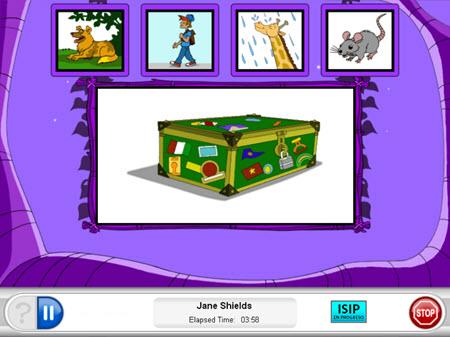
In this subtest, the narrator reads aloud a short story to students with no text present on the screen. The narrator then asks students a question related to the story. Students will choose from among four choices the picture that best answers the question.
Vocabulario (Vocabulary)
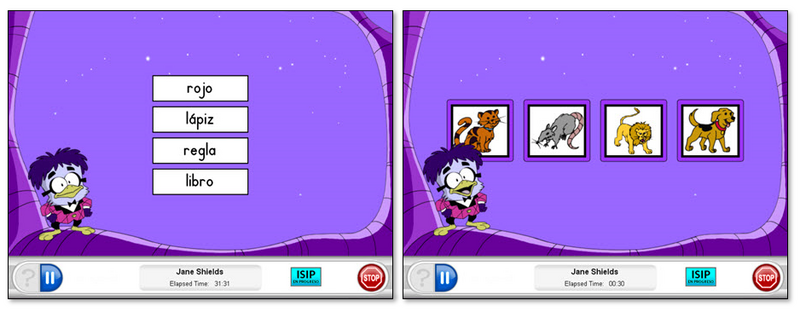
There are three types of questions used to measure students’ vocabulary knowledge and to evaluate both the upper and lower bounds of this knowledge.
- Four pictures appear on the screen. The narrator asks students to identify the picture that best illustrates the word spoken orally.
- Four pictures or words appear on the screen. The questions spoken by the narrator cover vocabulary objectives such as: familias de palabras, clasificación de palabras, sinónimos, etc. (word families, classification of words, synonyms, etc.). Students are asked to identify the correct word.
- Students are asked to match sentences to pictures. In this task a sentence and four pictures appear on the screen. The student reads the sentence and identifies the picture that best illustrates sentence meaning.
Comprensión de lectura (Reading Comprehension)
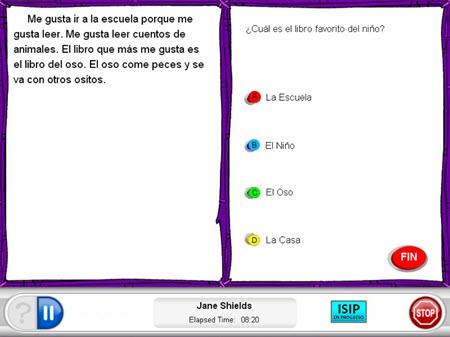
In this subtest, students are assessed on their ability to read and understand sentences and texts. In this task, a passage appears on the screen. Students indicate when they are finished reading by clicking on a button. After this button is clicked, the questions populate on the right side of the screen. Students may reread the passage as often as needed in order to select from among four answer choices. Kindergarten students select from pictures that represent each answer choice. These answer choices are supported by audio that is read by the narrator and repeated as needed.
Lectura con fluidez (Text Fluency)
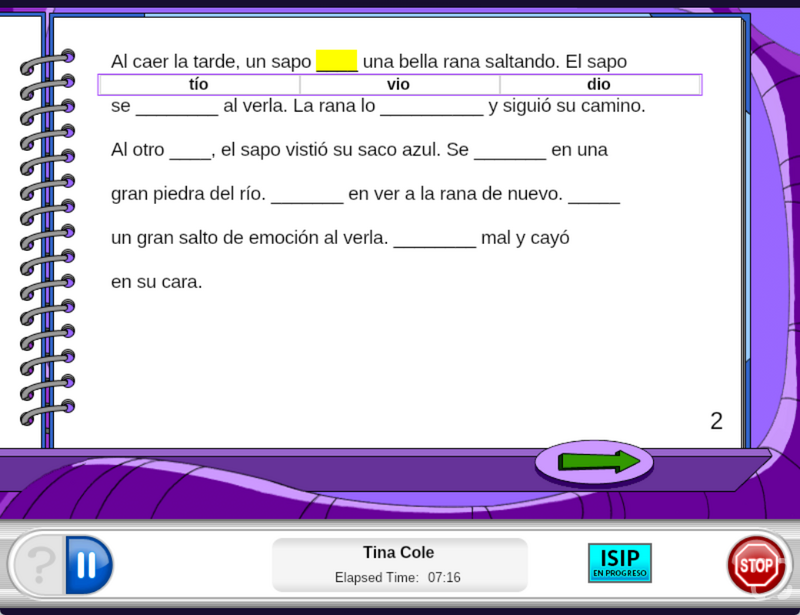
Text Fluency is constructed in a very different manner than the other subtests. Students are assessed on their skills in reading text with meaning in a specified period of time. In order to assess text reading on the computer, a Maze task is utilized in which every seventh word of grade-leveled stories is left blank. For each blank, students are given three choices from which to select the word that best completes the sentence. This subtest is two and a half minutes in length. This task has been shown to be highly correlated to measures of both fluency and comprehension.
Comunicación escrita (Written Communication)
There are four types of questions used to determine if students are developing fully specified orthographic representations of words.
- Students are asked to select from four choices the correctly spelled word that the narrator has just spoken.
- Students are asked to spell a specific word by choosing from the letters offered in an array on the screen.
- Students are asked to choose syllables offered in an array to spell the word that the narrator has spoken.
- The narrator reads a sentence. Students are asked to select words from an array in order to correctly write the sentence.